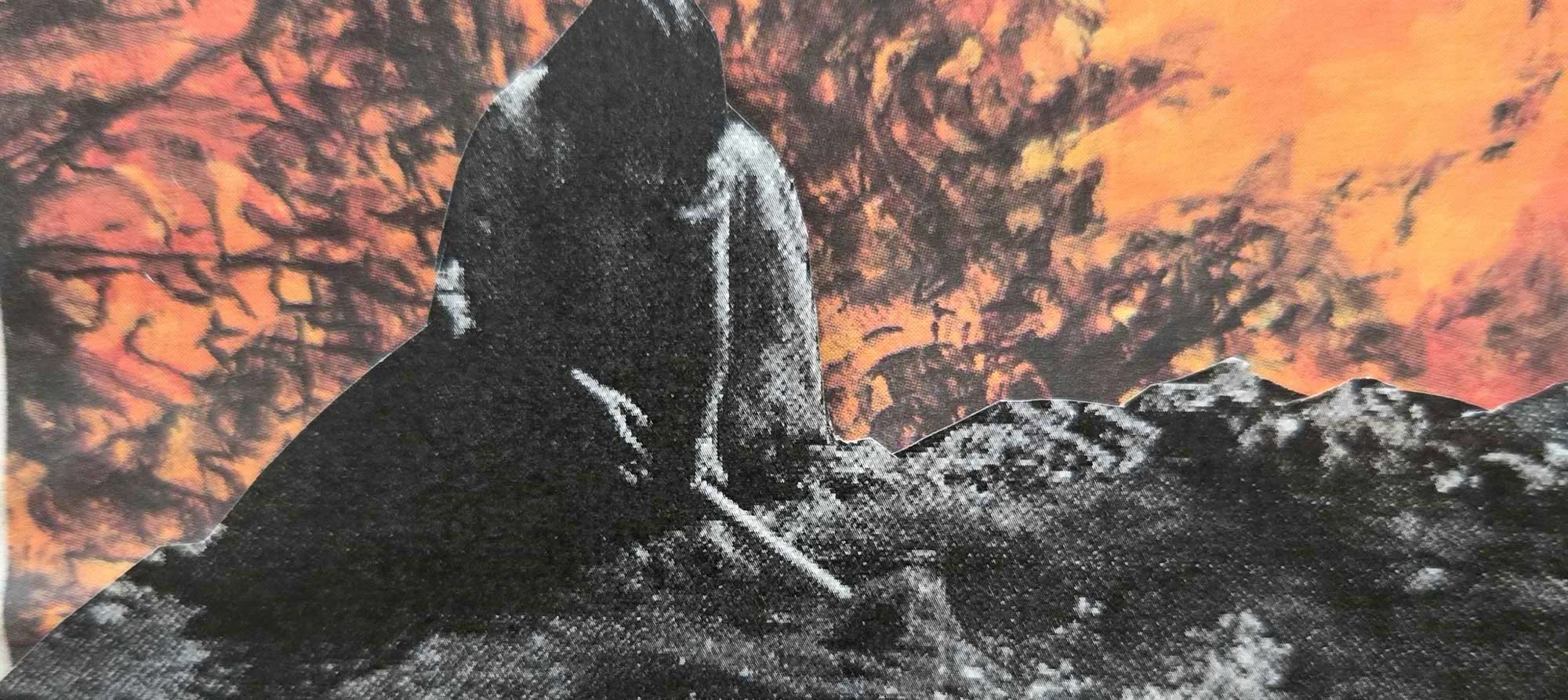
خاکی خەیاڵکراو Imagined Land Axê Xeyal Kirǐ
social memorial, 2023-ongoing
created with Nastaran Saremy
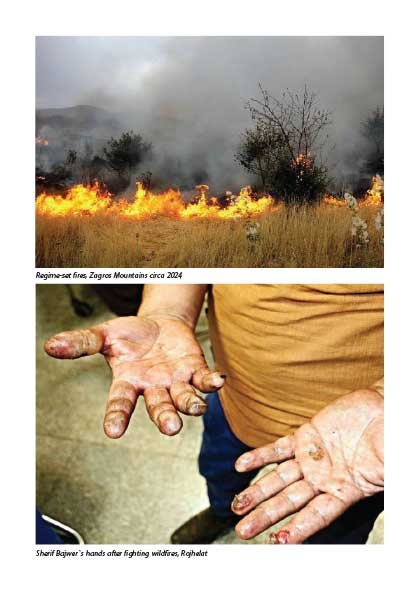
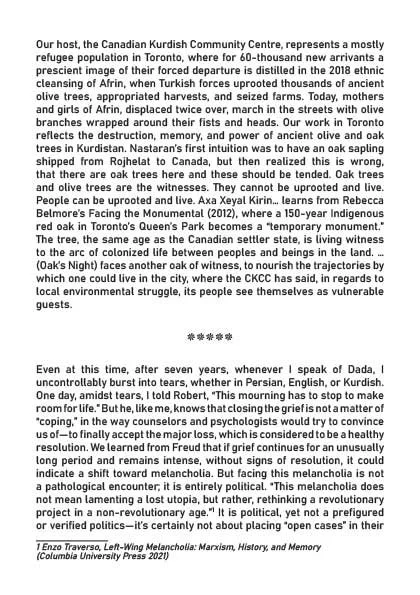
خاکی خەیاڵکراو Imagined Land Axê Xeyal Kirǐ is a social memorial and artistic research partnership guided by justice-seeking practices of mourners and environmentalists in Iran and Rojhelat (Eastern Kurdistan), wherefrom Saremy is exiled and regimes burn down ancient oak forests. Emerging from a sense of urgency in displacement, we implement tactics from social practice, visual art, counter-memorialization, traditional culture, and film to metamorphose burdens of unresolved grief for those who lost their lives in pursuit of freedom and justice across Iran and Kurdistan.
Imagined Land faces the intimate contours of mass killing, honoring two social constellations through which communities contest regimes of destruction and strive to sustain the conditions of life and sustain empathy for all beings: 1) Dadkhahi, the Farsi name for collective practices of demanding accountability for those executed, disappeared, and silenced; and 2) Jingeh Parizi, the Kurdish name for environmentalism, meaning “caring for and protecting what holds life," referring to a nexus of organizers and rituals devoted to the defense, repair, and revival of Kurdistan’s wounded ecologies. خاکی خەیاڵکراو corroborates Dadkhahi and Jingeh Parizi as two interconnected wings of a shared orientation toward liberating life and redeeming the past.
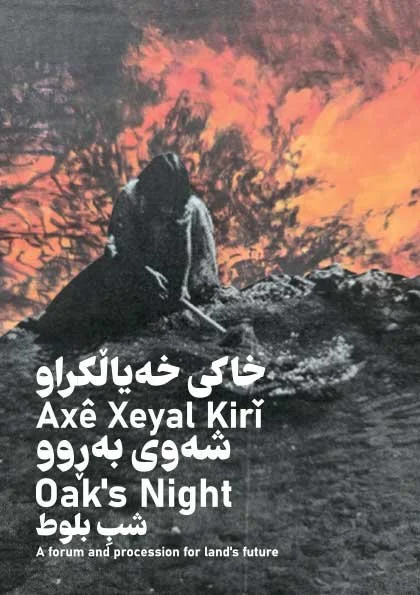
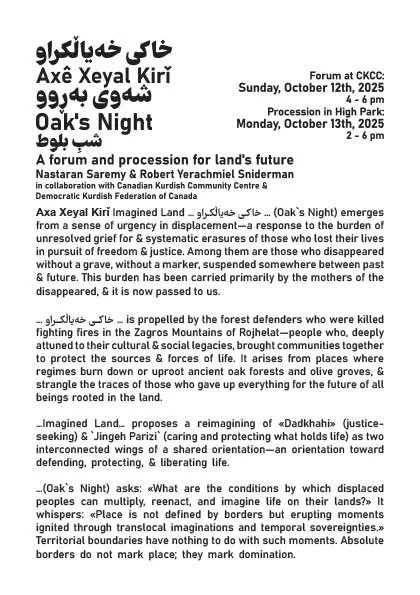
After two years of conversation, image-making, writing, and research, we directed and filmed Axê Xeyal Kirǐ Imagined Land خاکی خەیاڵکراو (Oak’s Night), a forum and procession for land’s future, on October 13–14, 2025 in Toronto, Canada. The multilingual forum at the Canadian Kurdish Community Centre (CKCC) foregrounded struggles of oppressed communities within the ecological landscape of the Zagros Mountains, bringing Nastaran’s family memory and forest defenders’ labor into dialogue with Kurdish and Iranian workers, refugees, political leaders, and intellectuals exiled in diaspora.
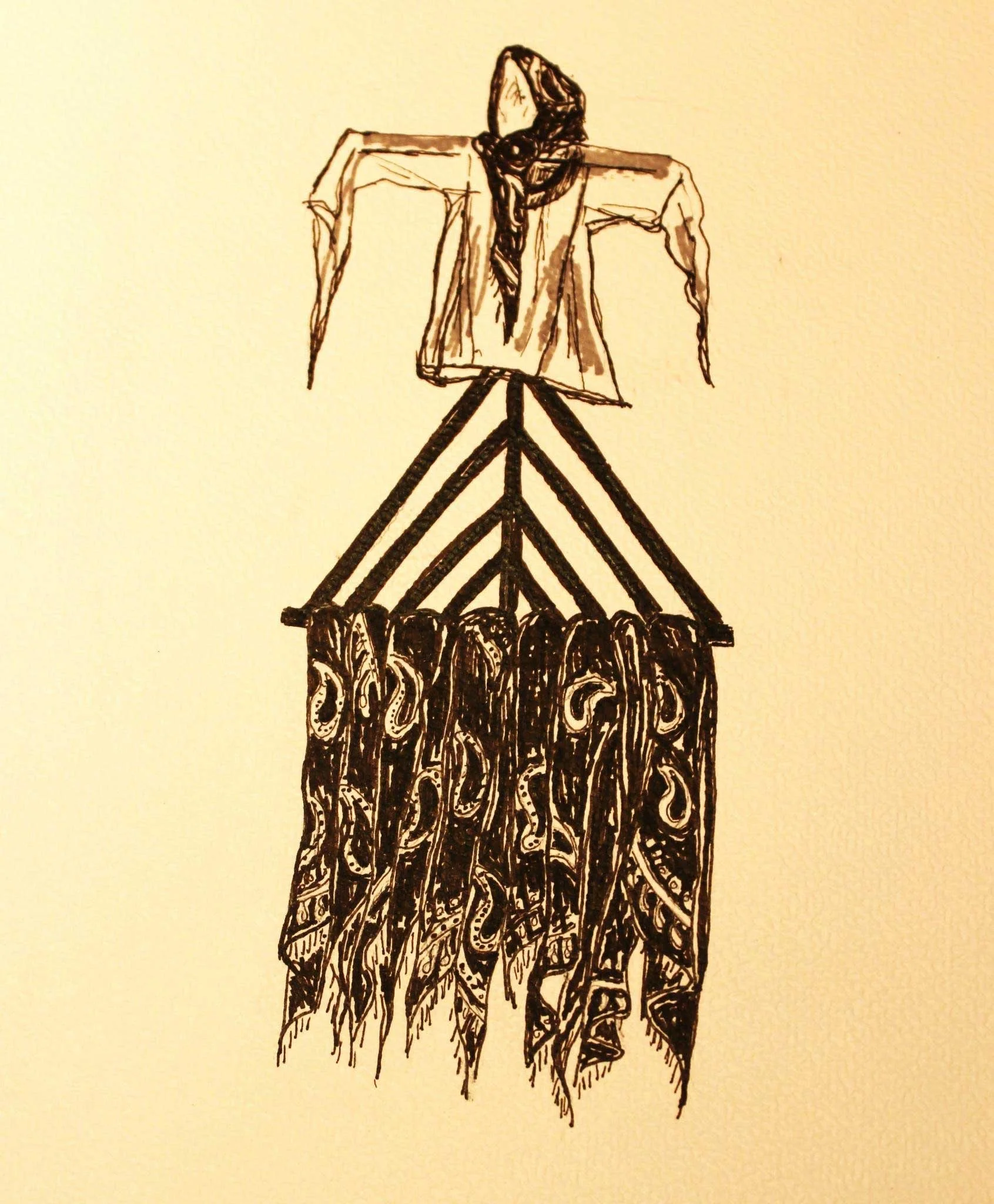
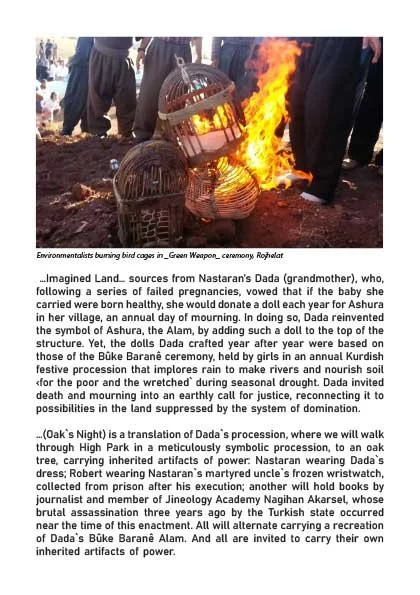
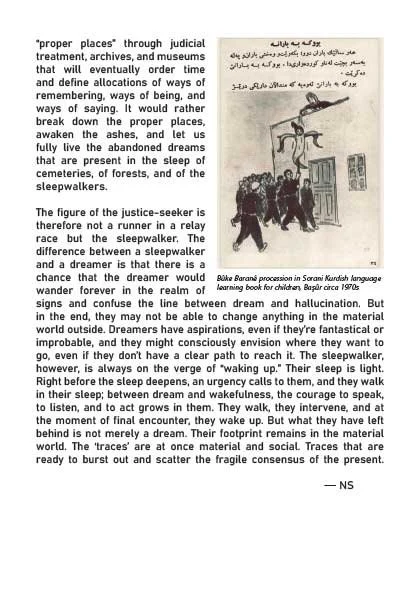
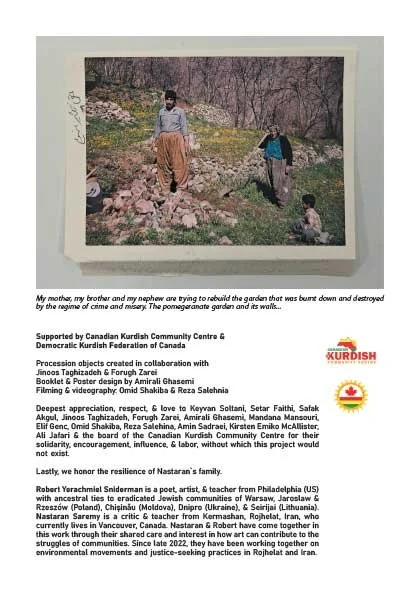
(Oak's Night) sourced from Nastaran’s Dada (grandmother), who, following a series of failed pregnancies, vowed that if the baby she carried were born healthy, she would donate a doll each year for Ashura in her village, an annual day of dramatic public mourning in Shia culture. In doing so, Dada reinvented the symbol of Ashura, the alam, by adding such a doll to the top of the structure. Yet, the dolls Dada crafted year after year were based on those of the Bûke Baranê (rain-doll) ceremony, performed by girls in an annual Kurdish festive procession that implores rain to make rivers and nourish soil 'for the poor and the wretched' during seasonal drought. Dada invited death and mourning into an earthly call for justice, reconnecting it to possibilities in the land suppressed by systems of domination.
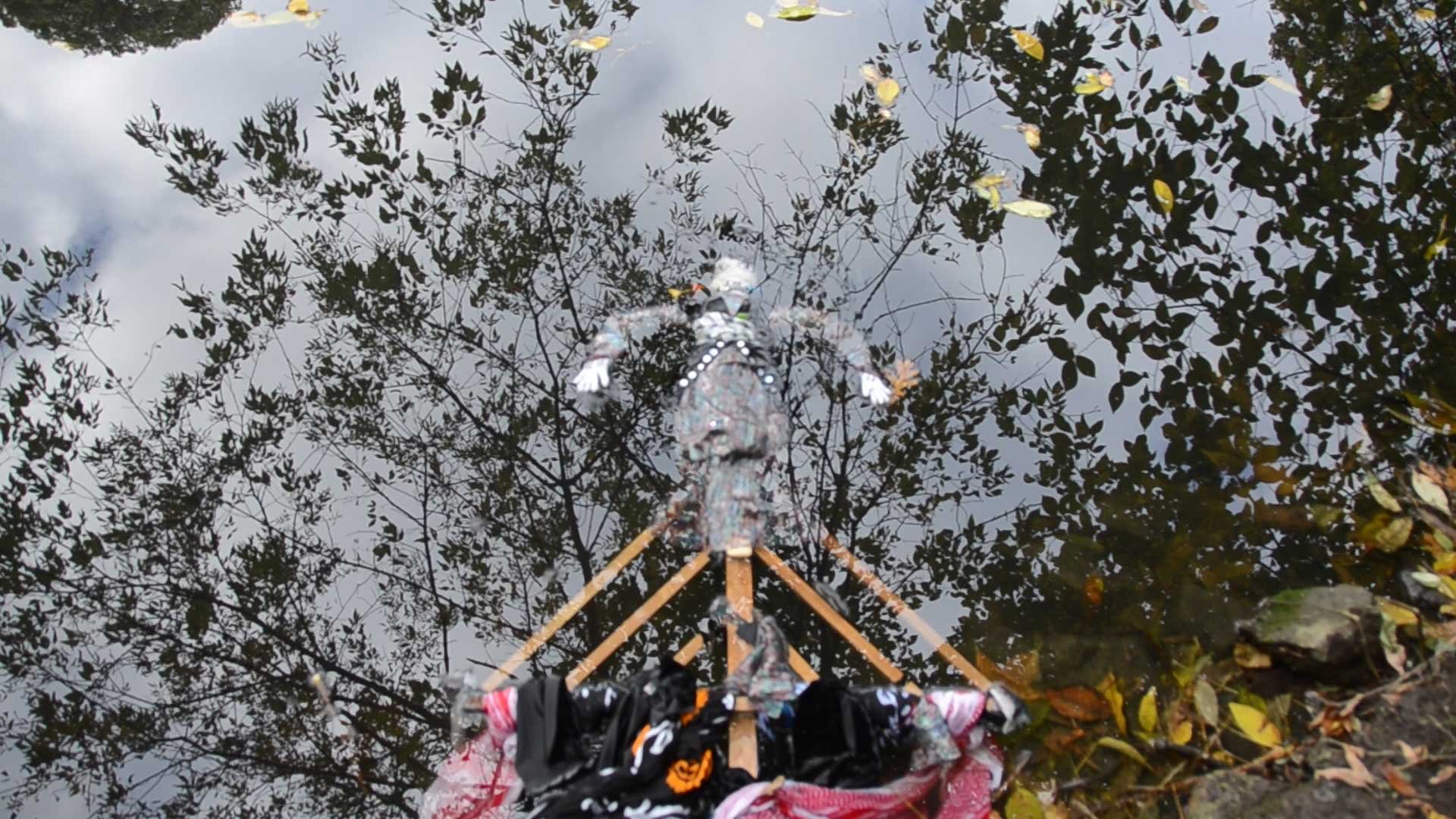
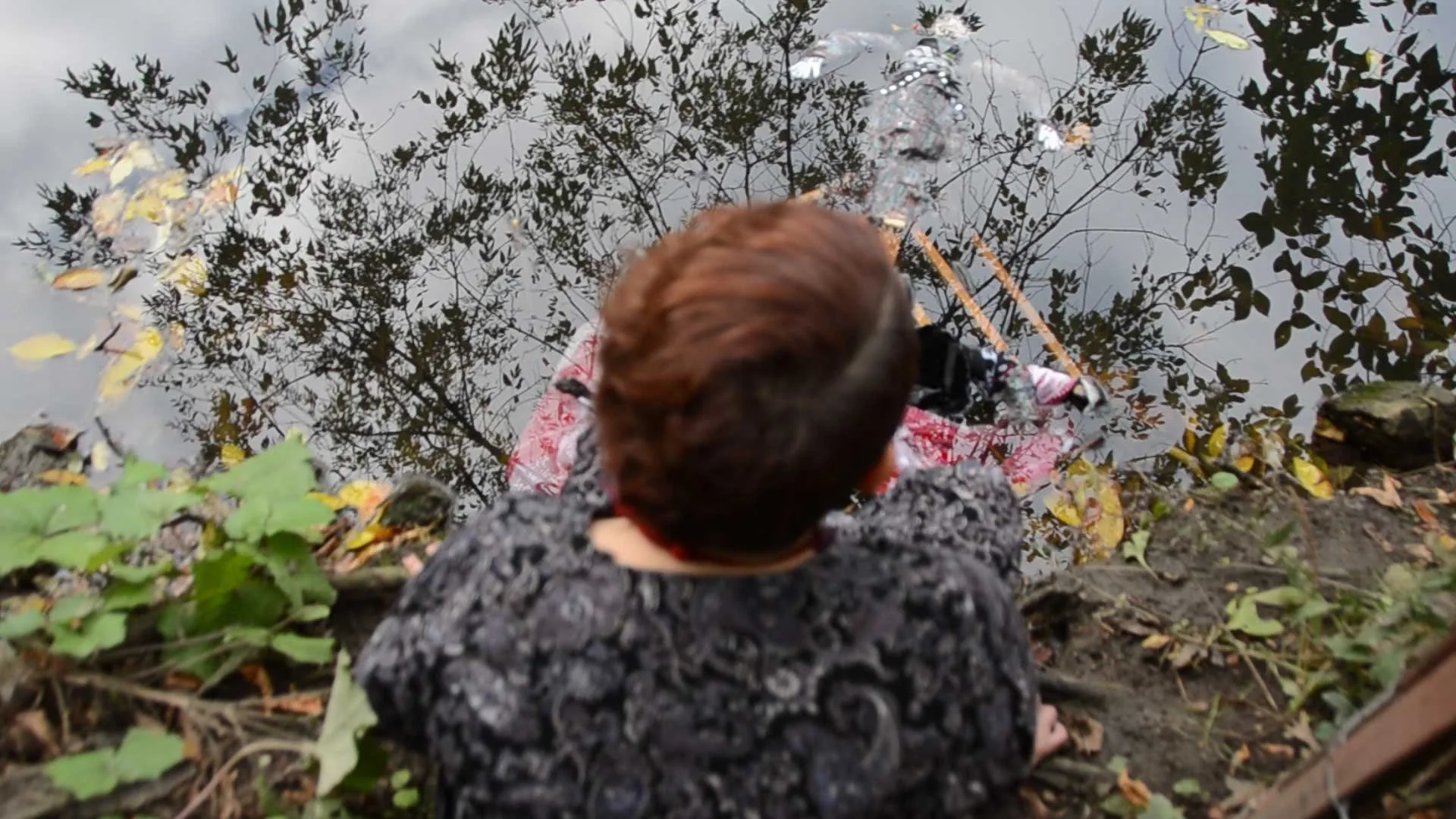
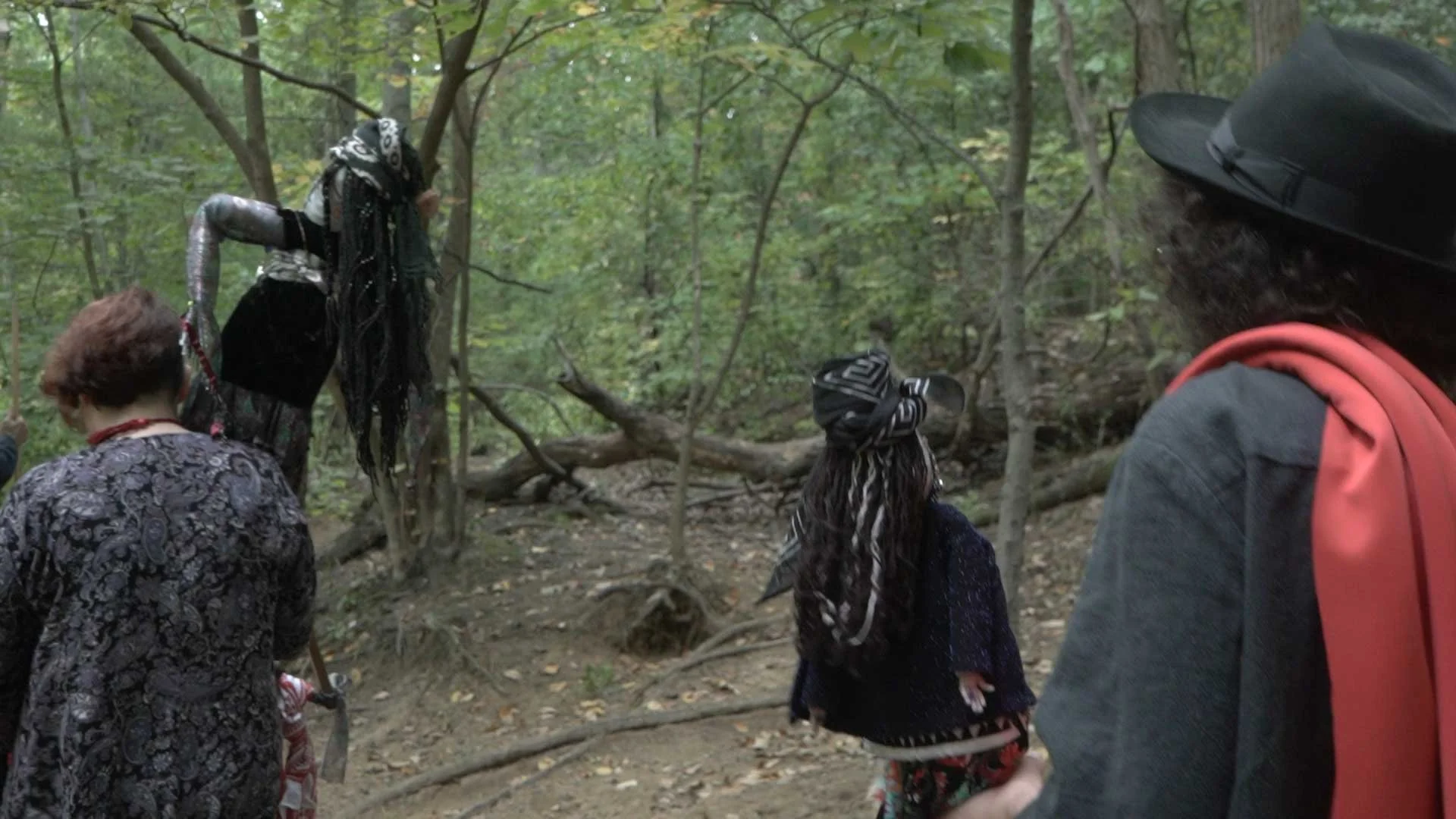
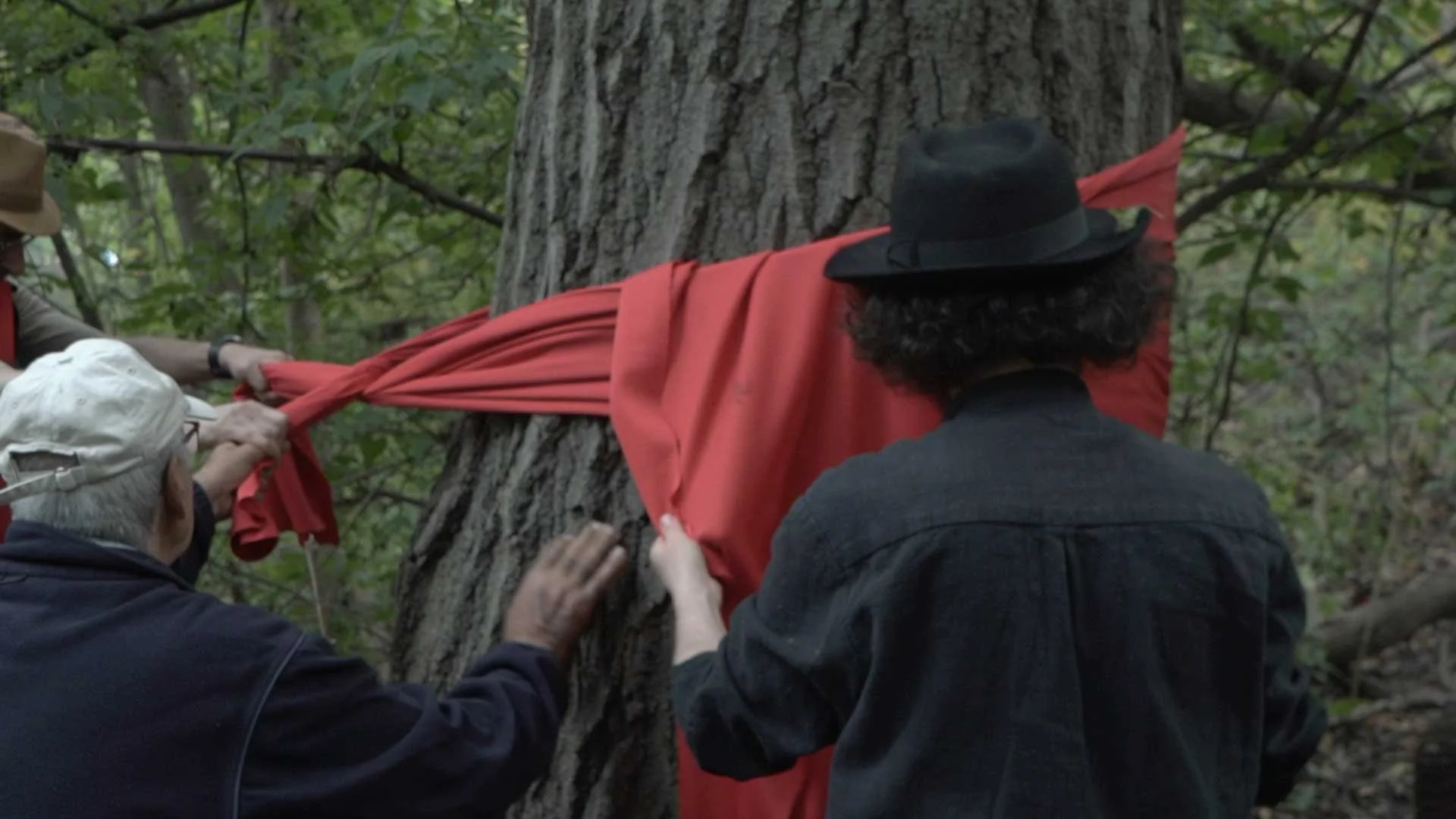
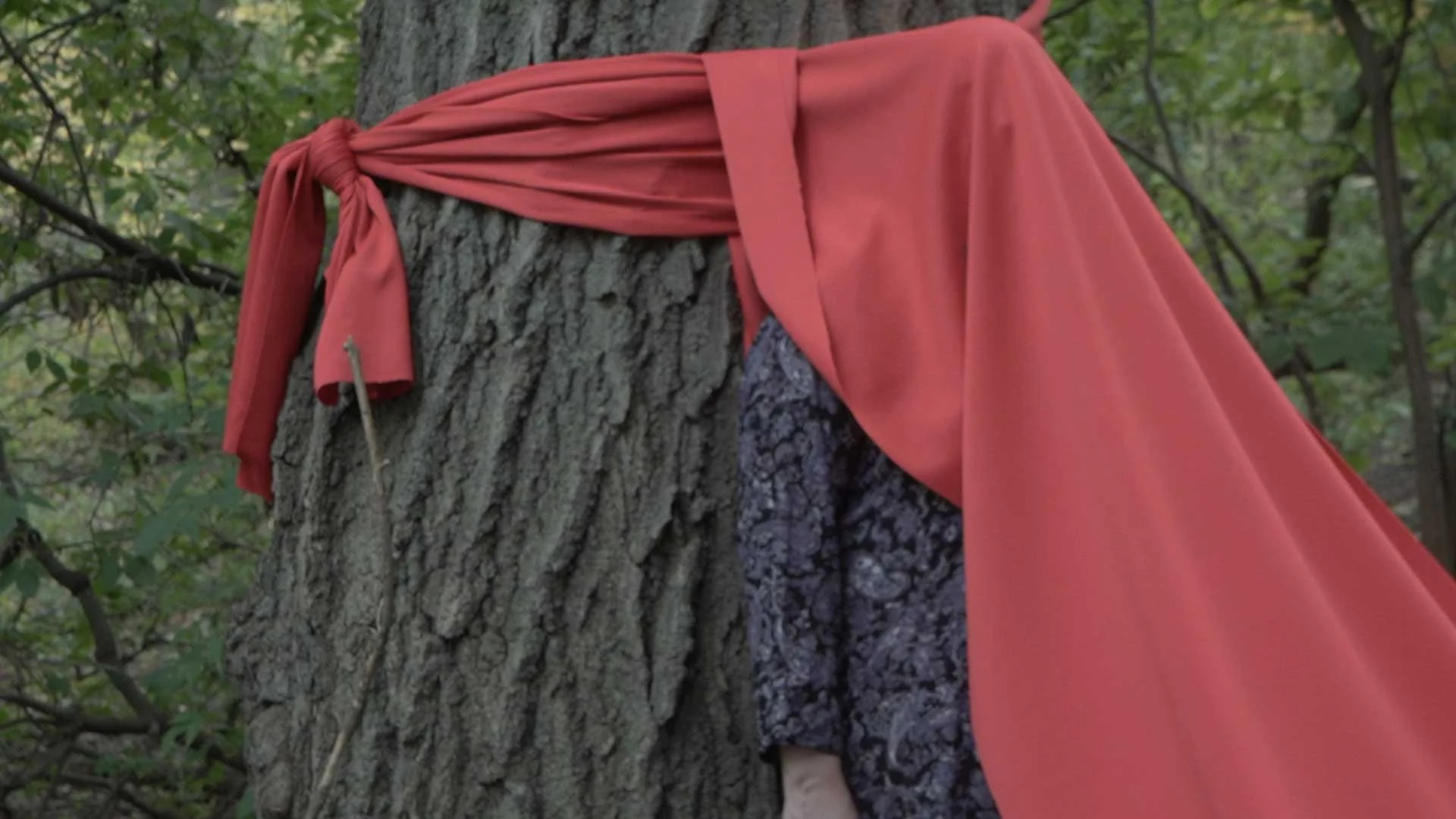
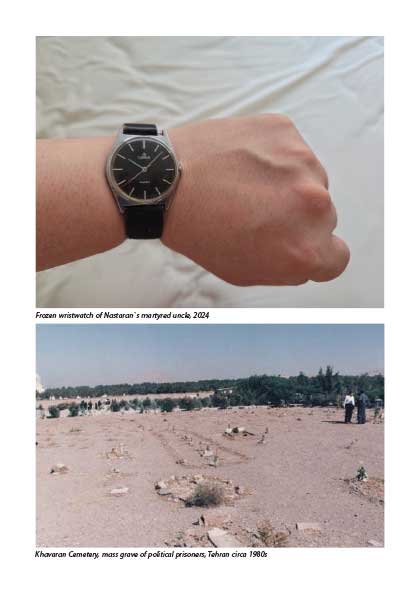
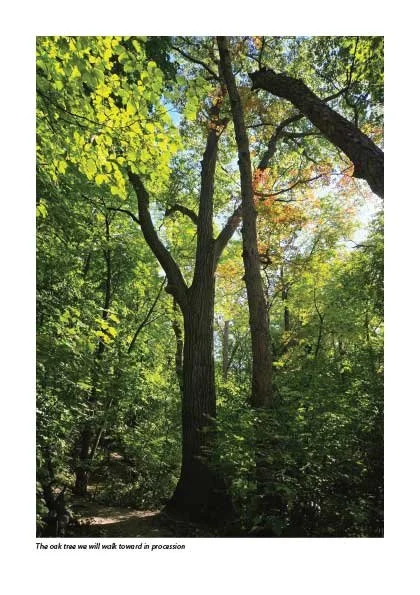
The (Oak's Night) procession translated Dada's Bûke Baranê ceremony within Canada's ecology, marked by Indigenous genocide and wildfires, where we walked in meticulously symbolic form to an old oak tree in Toronto's High Park, carrying inherited artifacts of power: Nastaran wore Dada's dress; Robert wore the stilled wristwatch of Nastaran's aforementioned uncle, collected from prison after his execution; Ömer Çakir carried the books he wrote in prison. All alternated carrying our re-creation of Dada's Bûke Baranê alam, Dada’s handmade doll, and two strips of red cloth drawn from Zagros burial practices.
Community leaders and members bearing stories of survival and resistance attended the forum and procession, responding to a call circulated through the CKCC, the Democratic Kurdish Federation of Canada, and our cross-ethnic networks. Participants included Çakir, a former political prisoner and Kurdish author; Jinoos Taghizadeh, Iranian artist, storyteller, and activist; Shokufeh Sakhi, former political prisoner and Iranian scholar; Setar Faithi, former Kurdish-Iranian guerrilla, photographer, and archivist; and Keyvan Soltany, political activist and community leader.
Sixteen such participants from the forum chose to join the procession, bringing their memories, pain, and hopes into the work, open to being addressed by its embodied gestures: carrying the alam in public space and submerging it in a pond; wrapping the oak in the red cloth and standing beneath it. These collective acts generated profound affective resonance, opened possibilities for collective healing, and reimagined exilic community power.
Following these events, we are creating a feature-length artistic film that weaves our documentation of (Oak's Night) by intuitive, philosophical, and poetic means into a comprehensive audio-visual story about the roots and potentialities of Dadkhahi and Jingeh Parizi. The film employs extensive archival research, reflective writing on (Oak's Night), and additional interviews and minor ritual actions in Toronto, Vancouver, Paris, and Tehran.
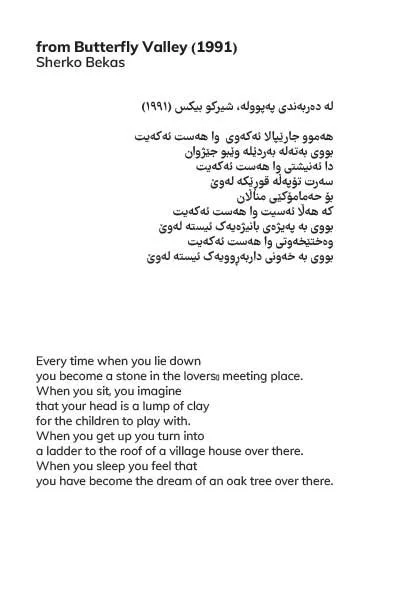
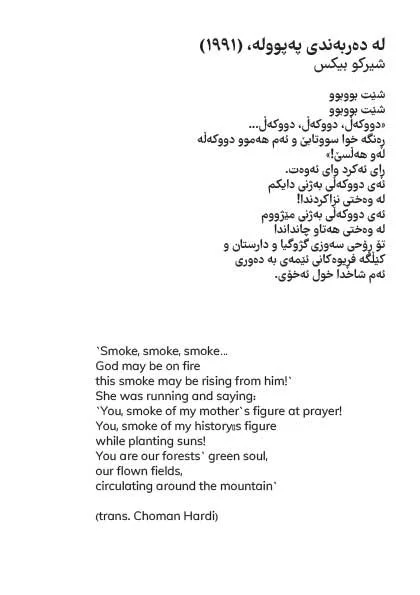
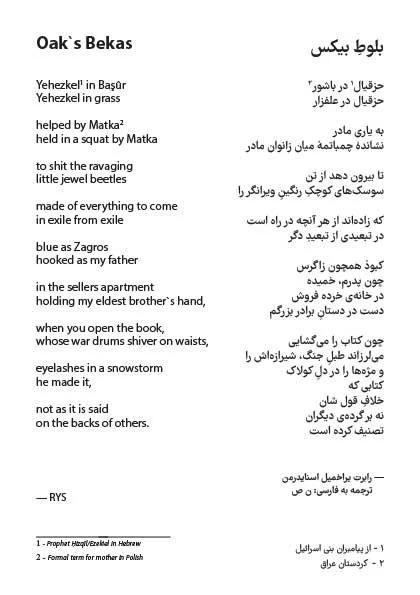
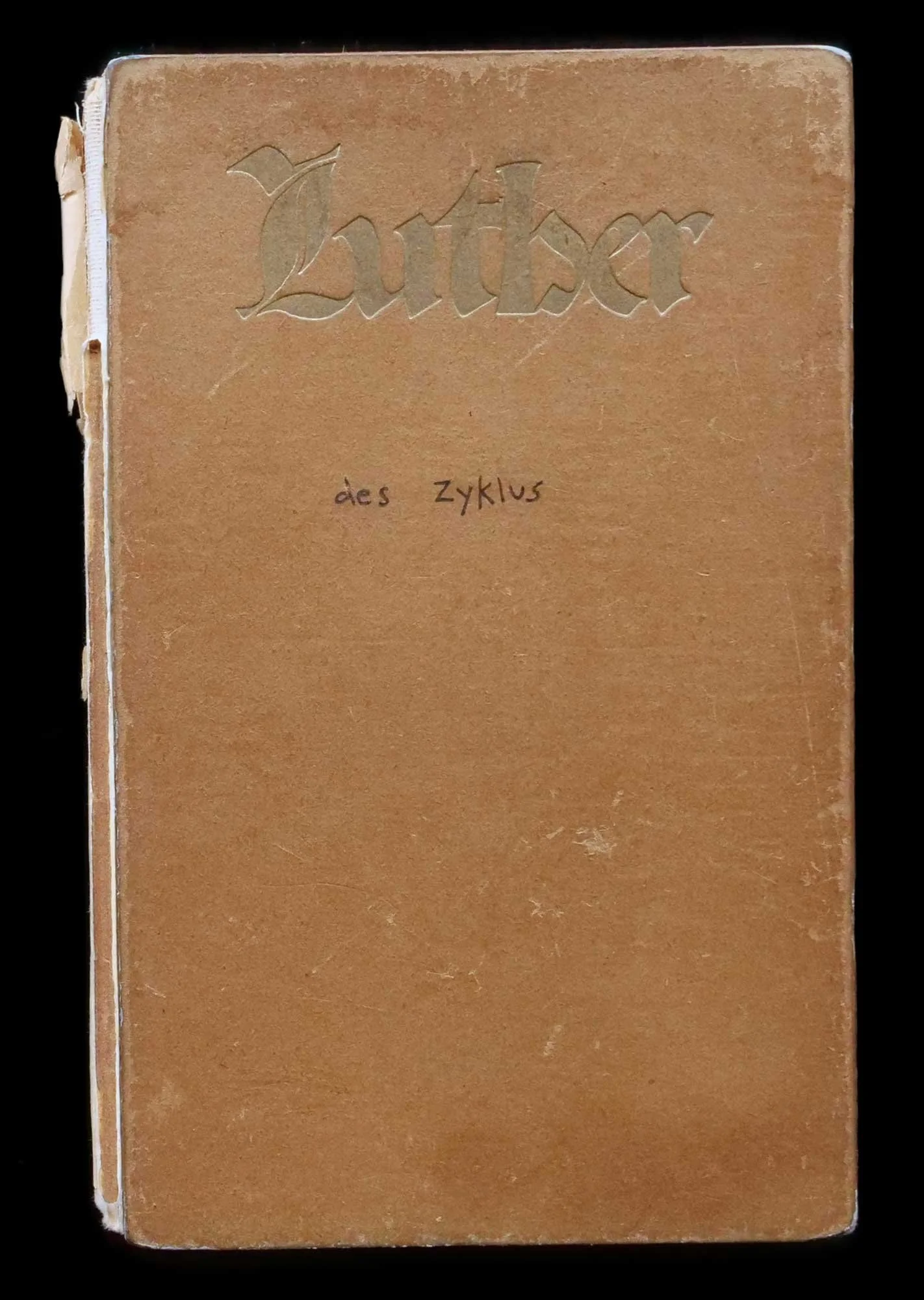
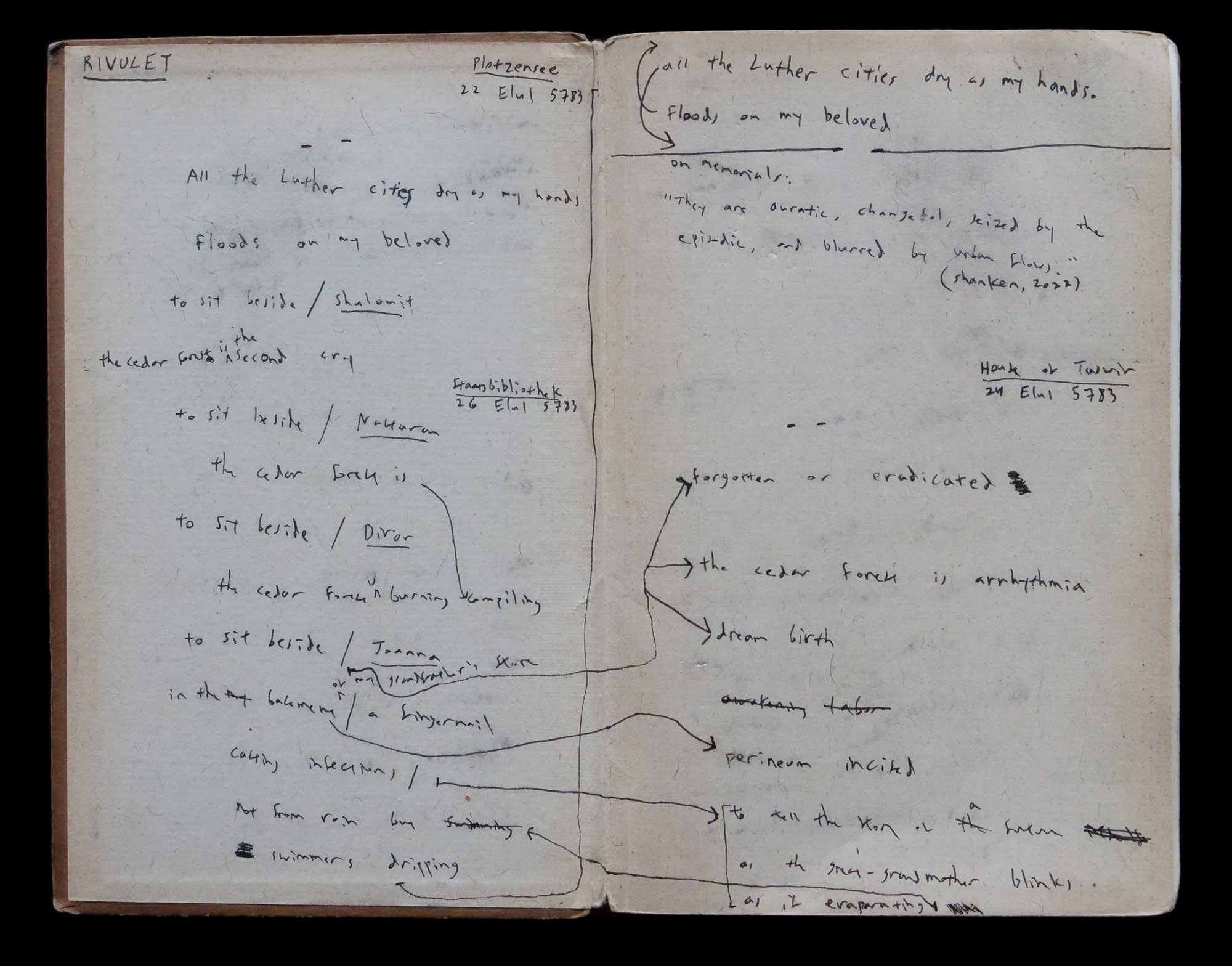
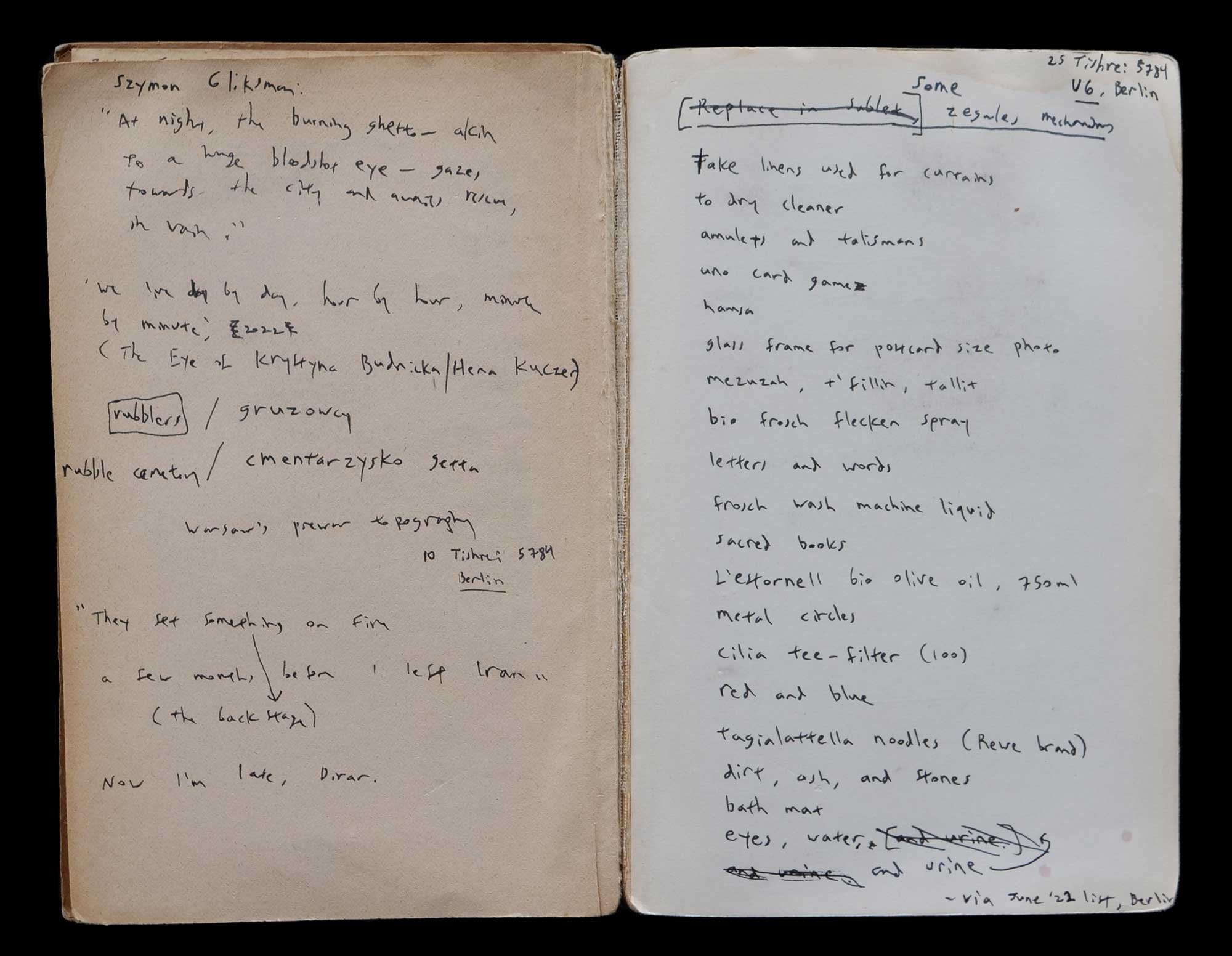
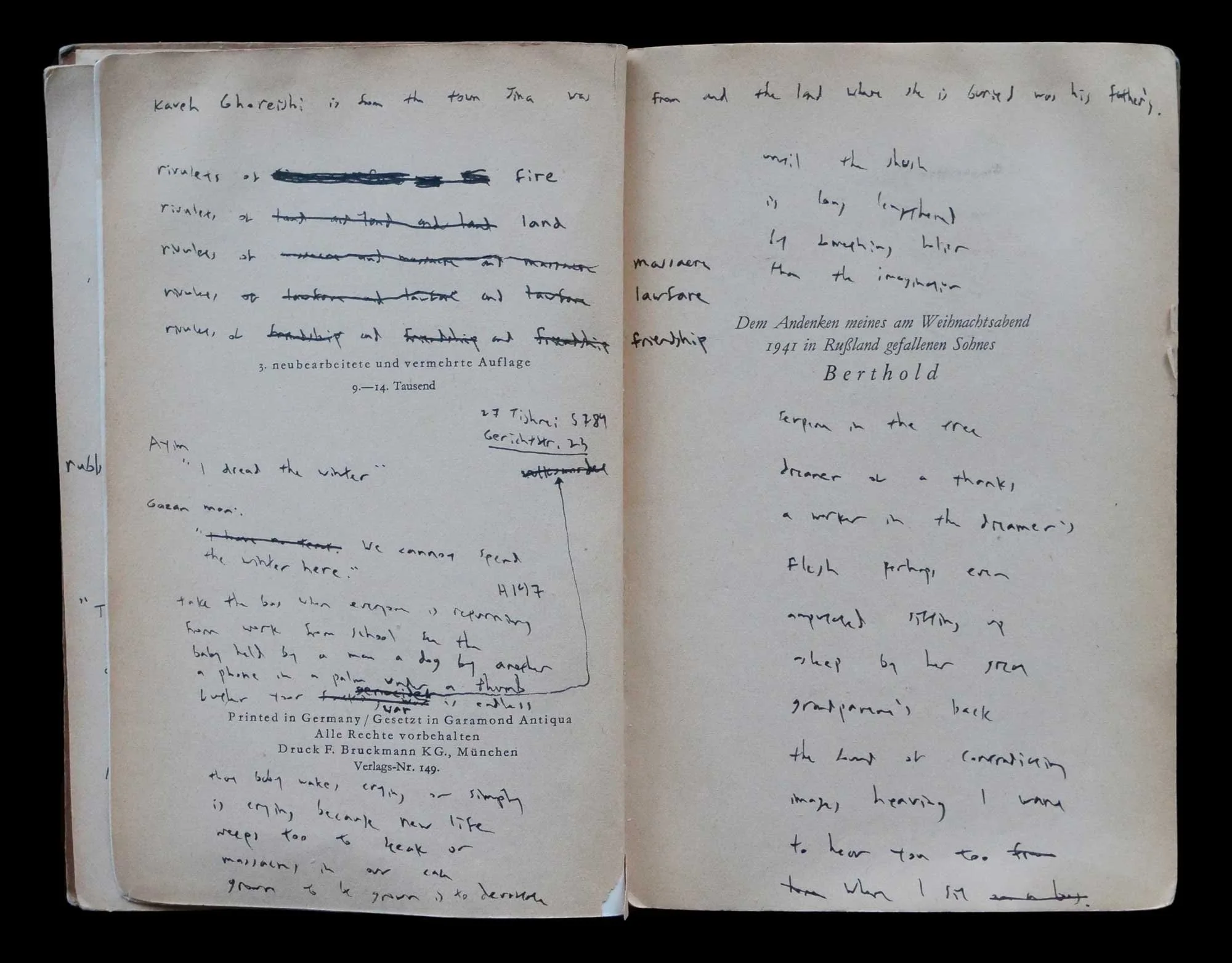
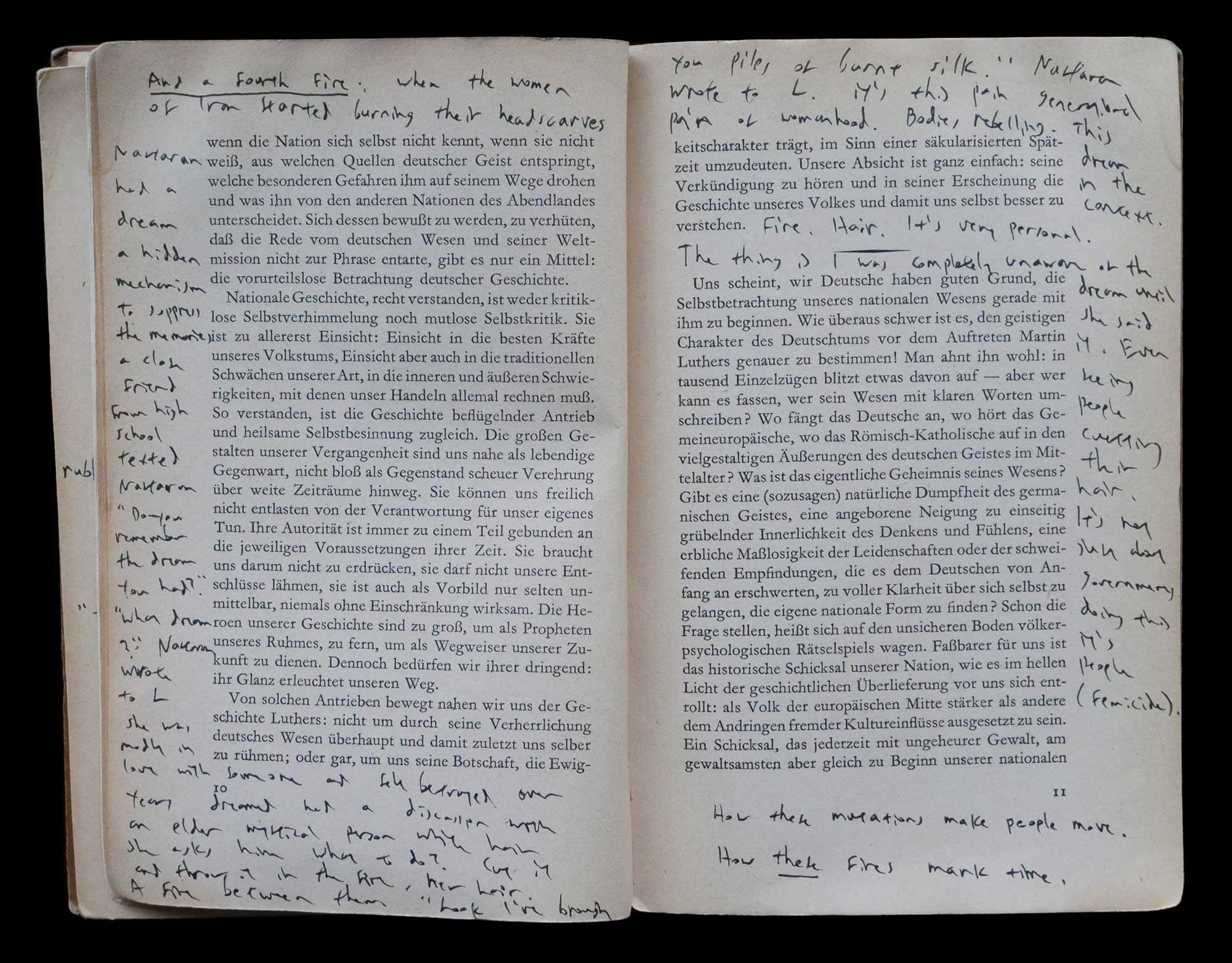
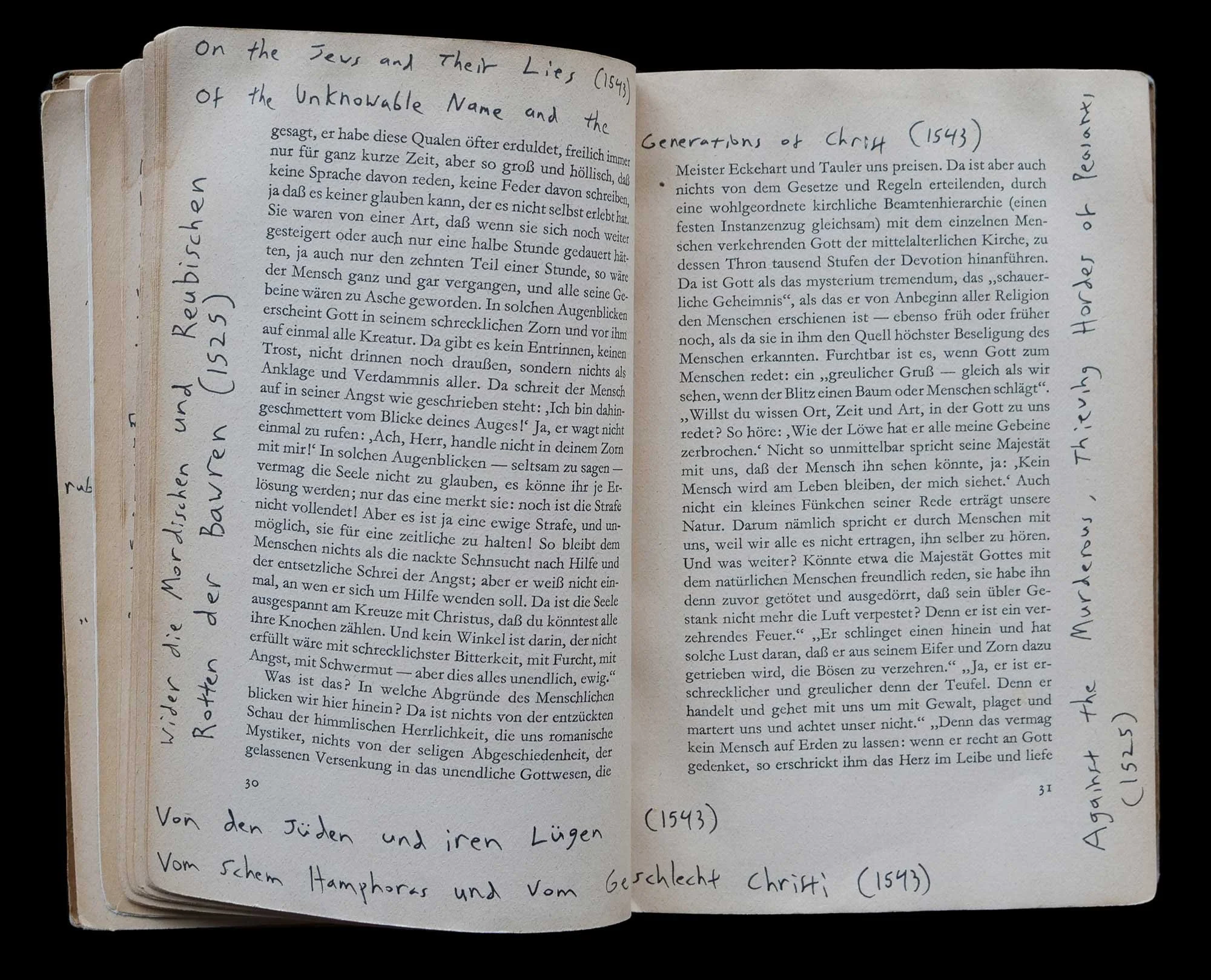
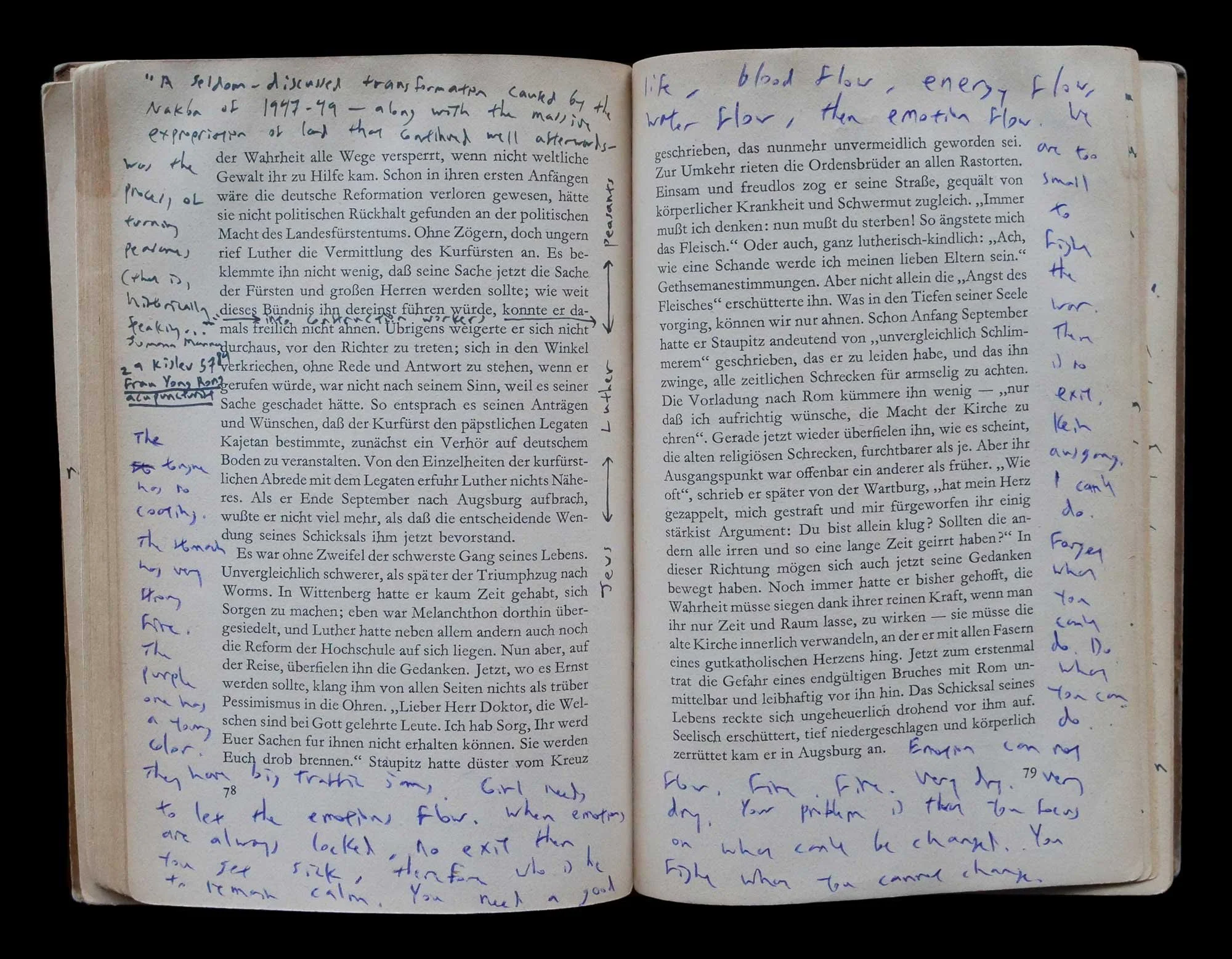
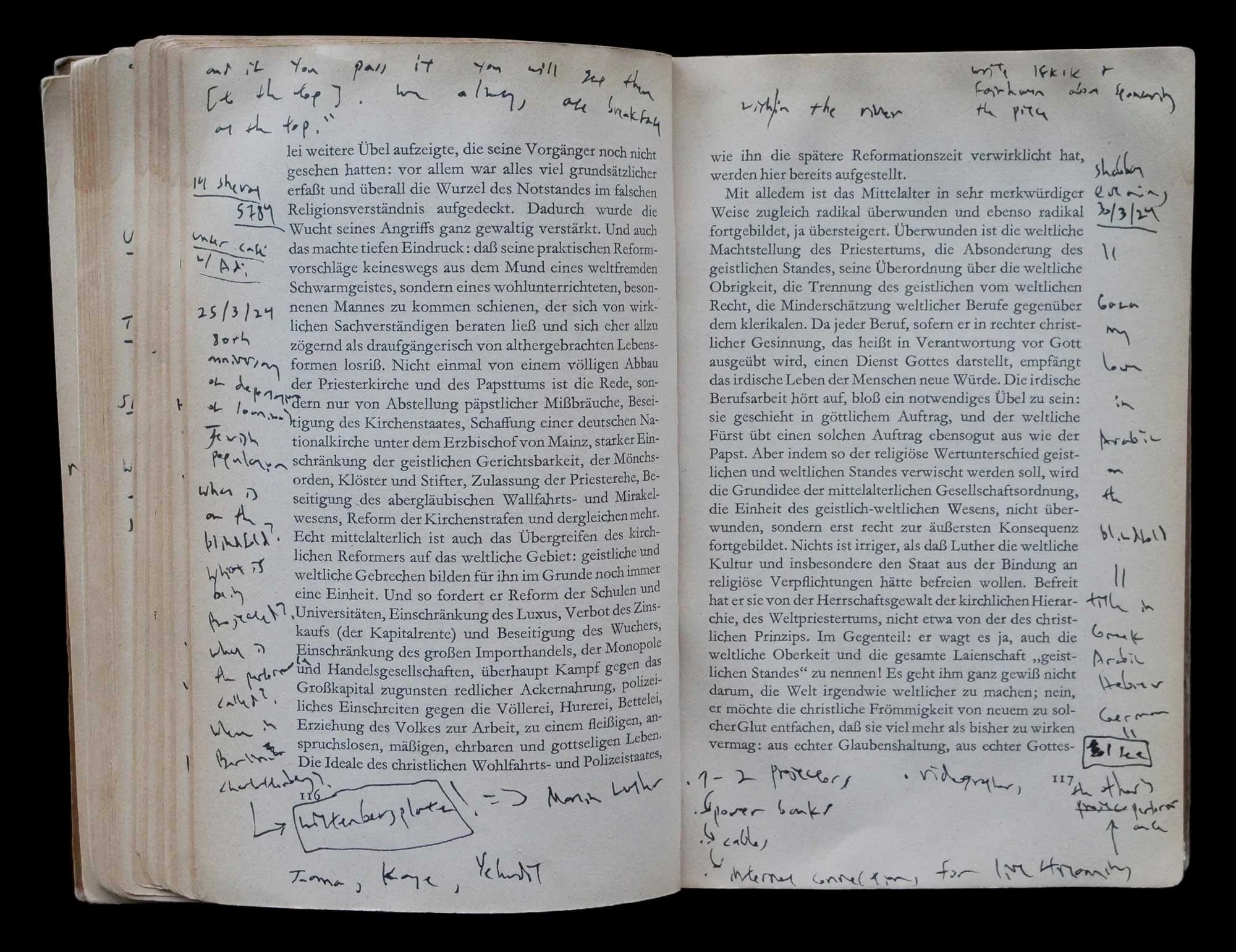
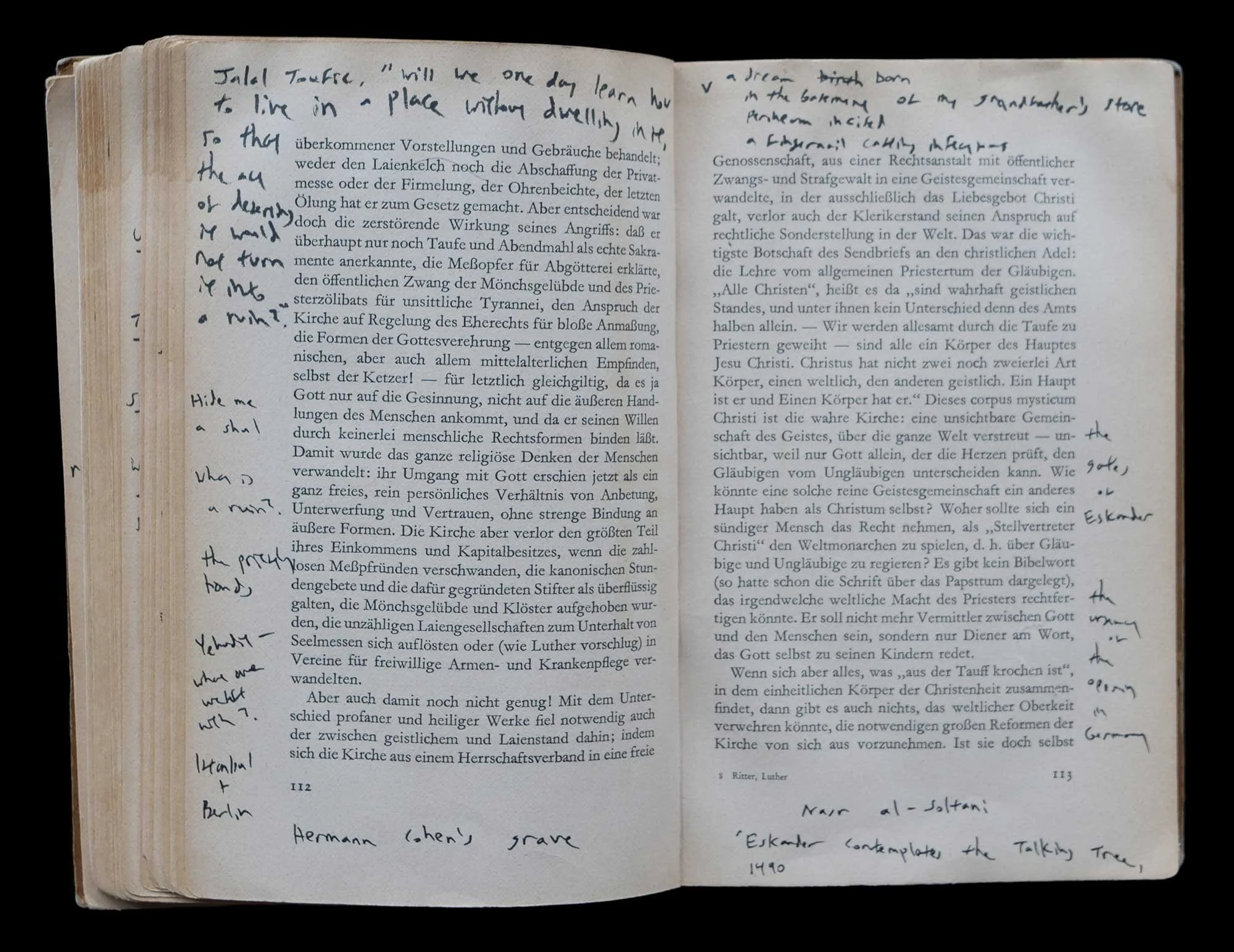
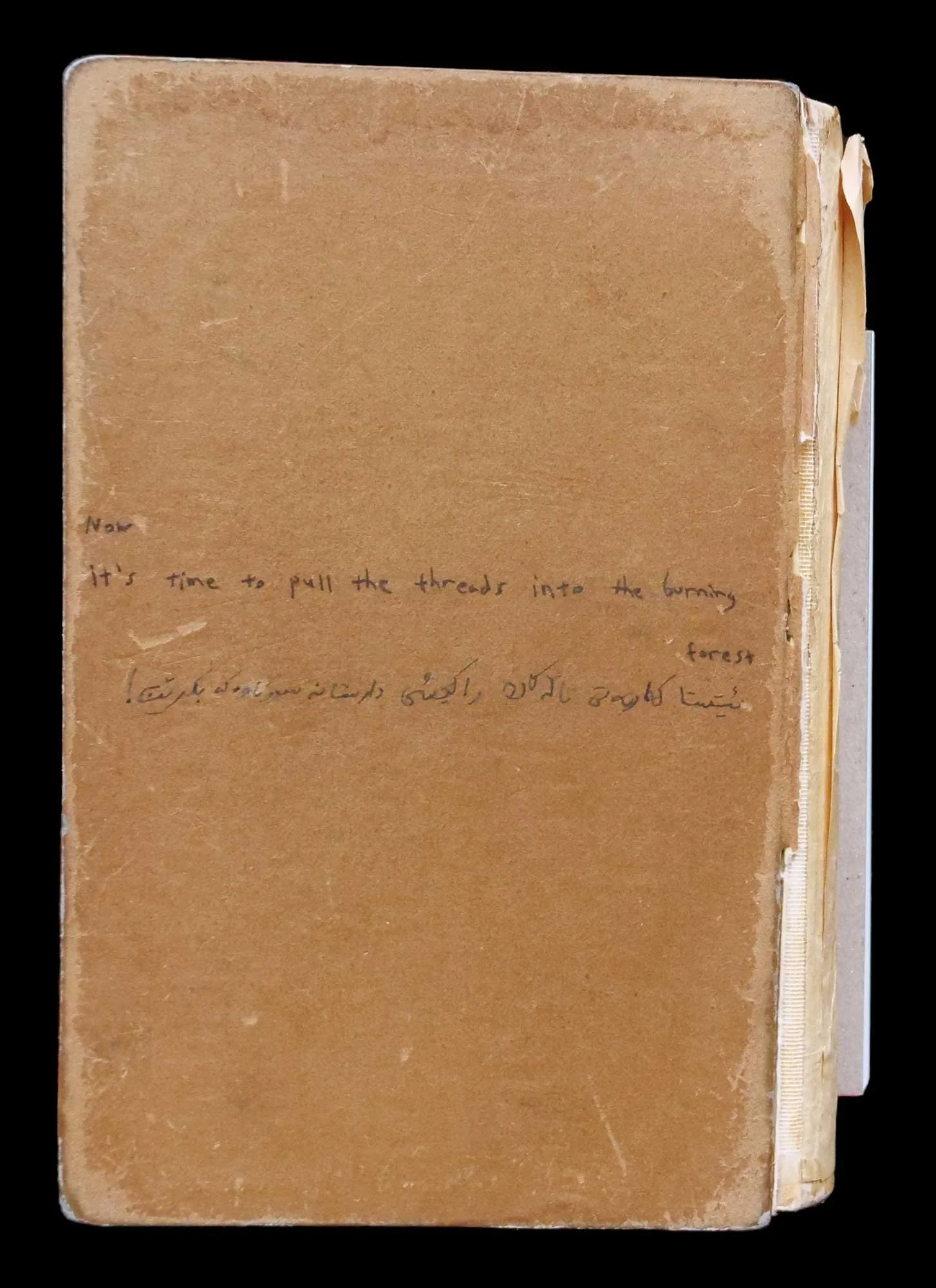
Luther des Zyklus ئێستا كاتیهتی تاڵهكان ڕاكێشی دارستانه سووتاوهكه بكرێن Now it’s time to pull the threads into the burning forest is an artist book Yerachmiel Sniderman created in part as a space to transcribe the first two years of خاکی خەیاڵکراو Imagined Land Axê Xeyal Kirǐ meetings and research sessions. The artist grafted such transcriptions, in addition to poems and observations, in the empty spaces of the German nationalist historian Gerhard Ritter's biography Luther, published and printed in Munich in 1943, or the height of the genocide of European Jews. The artist found the book in a box on a street in Berlin. Ordered according to the Hebrew calendar and the street, district, or city in which a writing session took place, Luther des Zyklus opens weeks before the Hamas massacre on 7 October 2023 and ensuing Gaza genocide. The book closes with transcriptions and meditations marked during the (Oak's Night) forum and procession, following a pilgrimage to the part of the Seine wherein the poet Paul Celan drowned himself in 1970. The book exists in formal dialogue with Saremy's artist book, The Book of Exodus, which works in the empty spaces of a contemporary printing of Thomas Moore's Utopia (1516).
Events and artist talks
2026, ' خەیاڵکراو Imagined Land Axê Xeyal Kirǐ'' (with Nastaran Saremy), Panel: Research-Creation in Turbulent Times, Breaking the Machine Symposium, University of British Columbia, Vancouver, Canada
2025, 'خەیاڵکراو Imagined Land Axê Xeyal Kirǐ (Oak's Night):A Forum and Procession for Land's Future' (with Nastaran Saremy), Canadian Kurdish Community Centre / Democratic Kurdish Federation of Canada, Toronto, Canada
2024, 'Works Against Genocide: Gaza, Shoah, Oak Anfal', College of Fine and Performing Arts: Department of Art & Art History and Fairhaven College of Interdisciplinary Studies, Western Washington University, Bellingham, the United States of America
Credits
Videography: Reza Salehi, Omid Shakiba
Pamphlet Design: Amirali Ghasemi
Photography for Luther des Zyklus: Cheong Kin Man
Production assistance: Keyvan Soltani, Safak Akgul, Jinoos Taghizadeh, Elif Genc, Forugh Zarei, Mandana Mansouri, Amin Sadraei, Kirsten Emiko McAllister, Ali Jafari, the board of the Canadian Kurdish Community Centre, and Kaveh Goreishi
Collaborator Biography
Nastaran Saremy (b. Kermanshah, 1984) is a Kurdish-Iranian interdisciplinary researcher, critic, environmentalist, and artist specializing in cultural and social analysis and aesthetics. A PhD candidate in Media and Communication studies at Simon Fraser University, she investigates how memory practices and mnemonic projects influence or hinder social transformation, attending to the material, social, and affective traces of collective experience. Her art and research-creation practice include the 'Contemporary Art and Everyday Life' workshop conducted in community centers across Tehran (2020) and guided "Collective Walks Through Memoryscapes" at the Iran International University Theatre Festival (IITF). In 2021, she co-directed the play 'The Urgency for Dialogue: Our Presence and the Future of Our Ancestors' at the IITF. Recent essays appear in Kurdish Women Through History, Culture and Resistance (2024) and FIELD: A Journal of Socially Engaged Art Criticism (2026).